Why integrating transport modelling and economics leads to better decisions
29 May 2026
Transport projects are complex, expensive, and long‑lasting. Governments and communities rely on robust evidence to decide which investments will deliver the greatest value: not just financially, but socially, economically and environmentally as well.
Traditionally, two key disciplines support these decisions:
- Transport modelling, which forecasts how people will travel in the future
- Economic appraisal, which assesses whether a project’s benefits outweigh its costs

While these disciplines are closely linked, they are often delivered separately. However, we’ve found that integrating transport modelling and economics leads to better, faster and more defensible project outcomes.
Let’s investigate what each discipline does, how they are connected, and why integrating them delivers real benefits.
The Role of Transport Modelling
Transport modelling is a cornerstone of transport planning and investment decision‑making. It is endorsed by national and state guidelines and used across the full lifecycle of projects, including:
- Identifying transport problems (such as future congestion or crowding)
- Testing and comparing project options
- Supporting business cases and funding decisions
- Prioritising programs and reviewing outcomes after delivery
At its core, a transport model predicts who will travel, where they will go, how they will get there, and how the transport network will perform in the future.

These models provide insight into:
- Travel demand by mode (car, public transport, walking, cycling)
- Network performance (travel times, congestion, crowding)
- How different project options change travel behaviour
This information forms a critical evidence base; on its own, though, it doesn’t always tell decision‑makers whether a project is necessarily “worth it”.
The Role of Economic Appraisal
Economic appraisal answers that question, helping to connect the changes surfaced in the modelling with net benefits of a project.
A transport economic appraisal (usually in the form of a cost–benefit analysis [CBA]) compares the costs of delivering a project with the benefits it generates for the community over time.

Key features of economic appraisal include:
- Assessing benefits and costs over a long-term horizon (typically 30 years)
- Accounting for benefits such as travel time savings, safety improvements and environmental outcomes
- Discounting future values to today’s dollars
These are used to produce key metrics, including:
- Benefit–Cost Ratio (BCR)
- Net Present Value (NPV)
Unlike financial analysis, which focuses on individual organisations or investors, economic appraisal looks at outcomes for the community as a whole, making it a critical tool for public sector decision‑making.
How Transport Modelling and Economics Are Linked
Transport modelling and economic appraisal are not separate silos but are actually intrinsically connected.

Transport models provide the key inputs that drive economic benefits, including:
- Changes in travel demand
- Changes in travel times and reliability
- Changes in vehicle kilometres travelled
- Changes in congestion, crowding and accessibility
These outputs are then translated into economic outcomes such as:
- Travel time savings for users
- Environmental benefits (e.g. emissions reductions)
- Safety benefits
- Productivity and accessibility impacts
For example, if a transport model shows that a project reduces travel times between homes and jobs, economists can quantify the value of that improvement to users and the wider economy.
Because of this direct connection, how modelling outputs are interpreted and applied in an appraisal is critical.
The Benefits of Combining Transport Modelling and Economic Appraisal

Clearer and More Efficient Decision‑Making
Integrating the two reduces interfaces and duplication, enabling faster iteration as options evolve and clearer accountability across project stages. This added efficiency is particularly valuable during early planning and business case development, where timely, credible evidence is critical to decision‑making.
Improved Representation of Real‑World Behaviour
Many transport investments deliver value through how people respond to changes in reliability, service quality and accessibility, not just through large shifts in infrastructure or capacity. An integrated approach ensures these behavioural responses are represented consistently across both modelling and appraisal. This reduces the risk of key benefits being understated or overlooked, and results in economic evaluations that better reflect real‑world travel behaviour.
Greater Rigour for Complex Projects
Projects involving new modes, pricing mechanisms or network trade‑offs often challenge standard appraisal methods when modelling and economics are treated in isolation. Integrating the disciplines ensures appraisal approaches remain aligned with the way demand and choice behaviour are represented in the transport model. This improves transparency, strengthens the defensibility of results, and supports successful scrutiny by assurance bodies, funding agencies and central Treasuries.
Practical, Real‑World Examples
The value of integration is evident across many common transport investment contexts.
Bus Priority
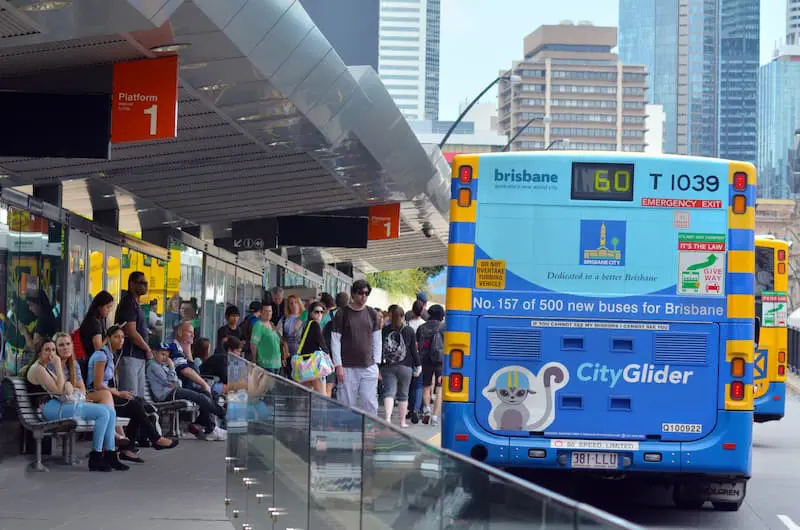
Bus priority schemes typically involve reallocating existing road space. Transport models capture the resulting changes in travel time, including improved bus travel times and increases in general traffic congestion, however, often miss improved customer passenger experience and reliability. Integrated understanding across modelling and economics ensures that this user experience is more consistently reflected in both the modelling and appraisal, providing a clearer view of the net project outcome.
Walking and Cycling Projects
Walking and cycling projects are often modest in scale, yet a full strategic modelling and appraisal process can be disproportionate in effort and cost. Integrated, rapid assessment approaches provide a more proportionate evidence base, enabling timely evaluation of health, emissions and decongestion benefits.

New Transport Modes
Where a project introduces a new mode or service, traditional comparisons can struggle to reflect the full choice set available to travellers. Integration allows appraisal approaches that more accurately reflect how people choose between destinations and modes.
Pricing and Tolling Projects
Different users value time and money differently. Aligning behavioural modelling with economic appraisal helps capture these variations, avoiding over reliance on simple averages and supporting benefit estimates that better align with observed travel behaviour.